
The RSoft Simulation Modules provide a set of electromagnetic solvers for modeling, analyzing, and optimizing passive and active photonic components. They support device-level simulation across waveguides, gratings, photonic crystals, diffractive structures, and complex photonic materials.
BeamPROP
BeamPROP is a Beam Propagation Method (BPM) solver used for modeling guided wave propagation in waveguides, couplers, splitters, tapers, and multimode structures. It is best suited for long propagation devices where computational efficiency is important.
Where BeamPROP is Used?
WDM devices such as arrayed waveguide grating (AWG) routers, switches, modulators, multimode interference devices, passive 1×N and N×N splitters, laser transverse mode analysis, standard and specialty fiber design, grating-based structures, and optical sensor components.

FullWAVE
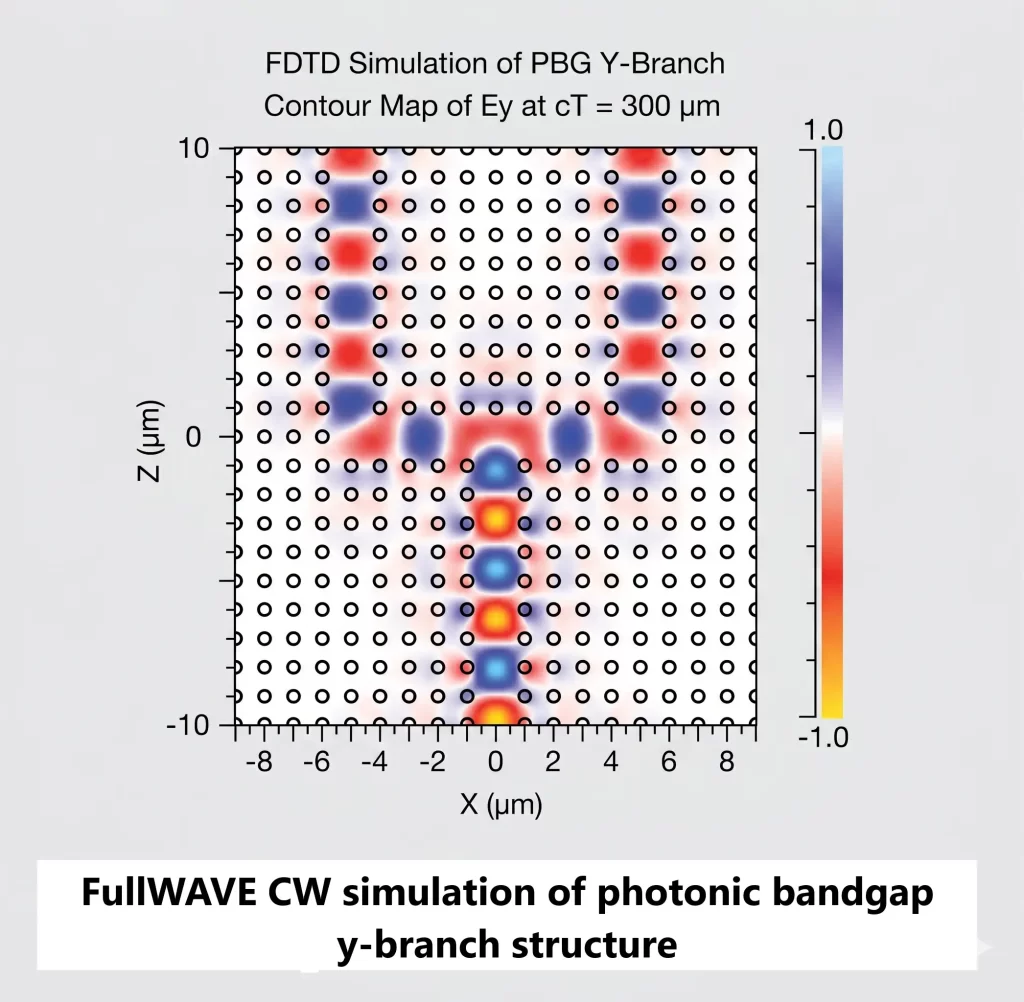
FullWAVE is a Finite-Difference Time-Domain (FDTD) solver used for high-index contrast devices, nanophotonic structures, silicon photonics, subwavelength features, and nonlinear materials. It provides accurate time-domain analysis for complex optical structures.
Where FullWAVE is Used?
Nanophotonic and high-index contrast devices including ring resonators, photonic bandgap structures, diffractive elements, cavity analysis, nano- and micro-lithography, biophotonics, LED extraction, plasmonic structures, and optical sensing applications.
BandSOLVE
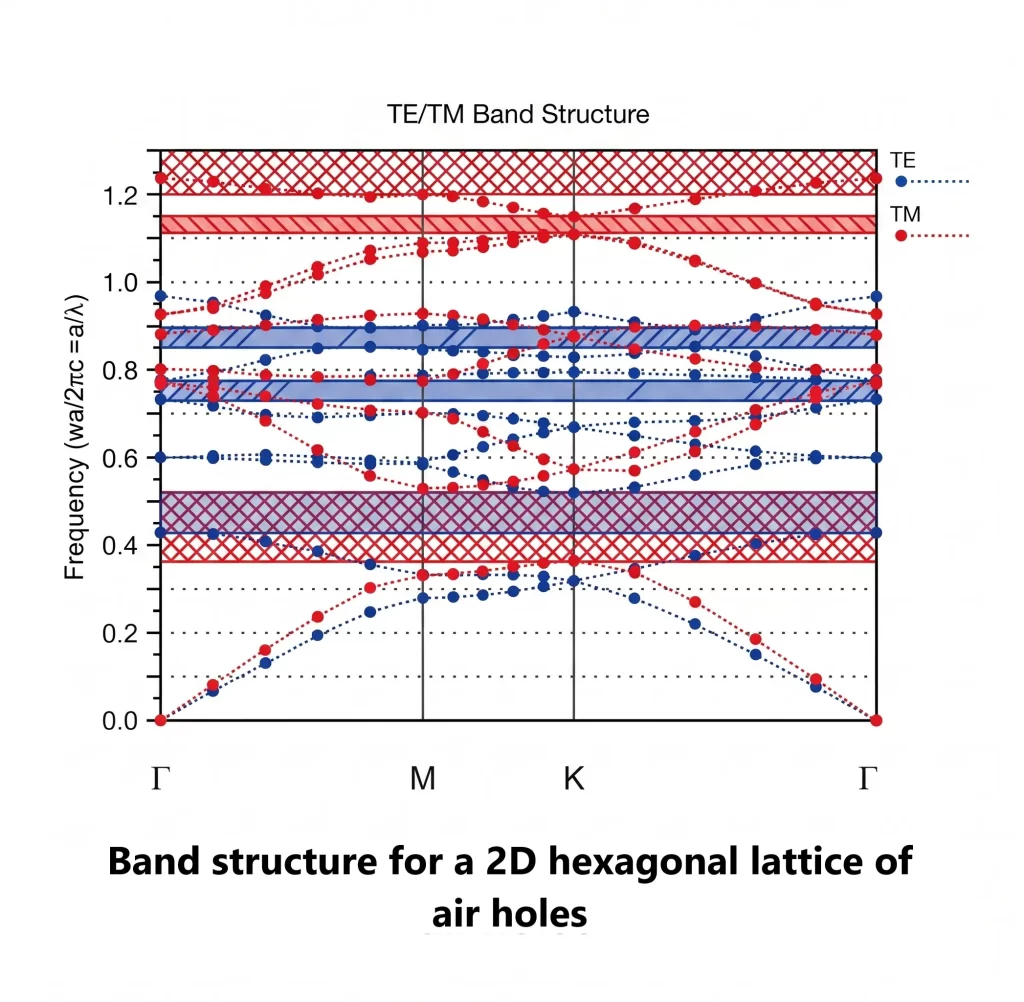
BandSOLVE is Photonic Band Structure solver used for photonic crystal analysis, bandgap engineering, periodic optical structures, and Bloch mode analysis. It calculates dispersion relations and photonic band diagrams.
Where BandSOLVE is Used?
Photonic crystal analysis including 2D and 3D slab waveguides, cavity structures, photonic crystal fibers, bandgap engineering, defect mode analysis, and periodic optical material research.
ModePROP
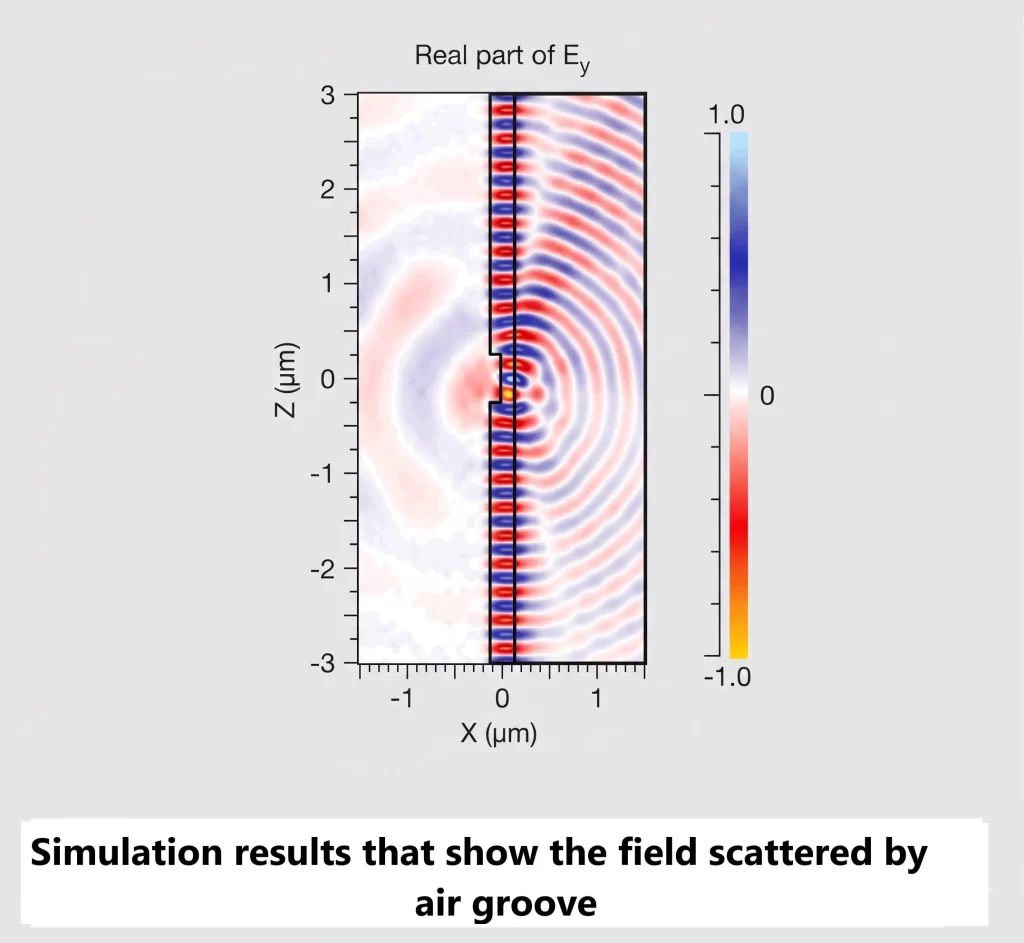
ModePROP is an Eigenmode Expansion solver used for multimode waveguide analysis, mode coupling problems, optical transitions, and fiber-device interfaces. It is efficient for segmented structures and mode interaction studies.
Where ModePROP is Used?
Waveguide and fiber-based systems including mode coupling analysis, surface-normal grating couplers, plasmonic devices, optical sensors, filters, mode converters, and photonic bandgap structures.
DiffractMOD
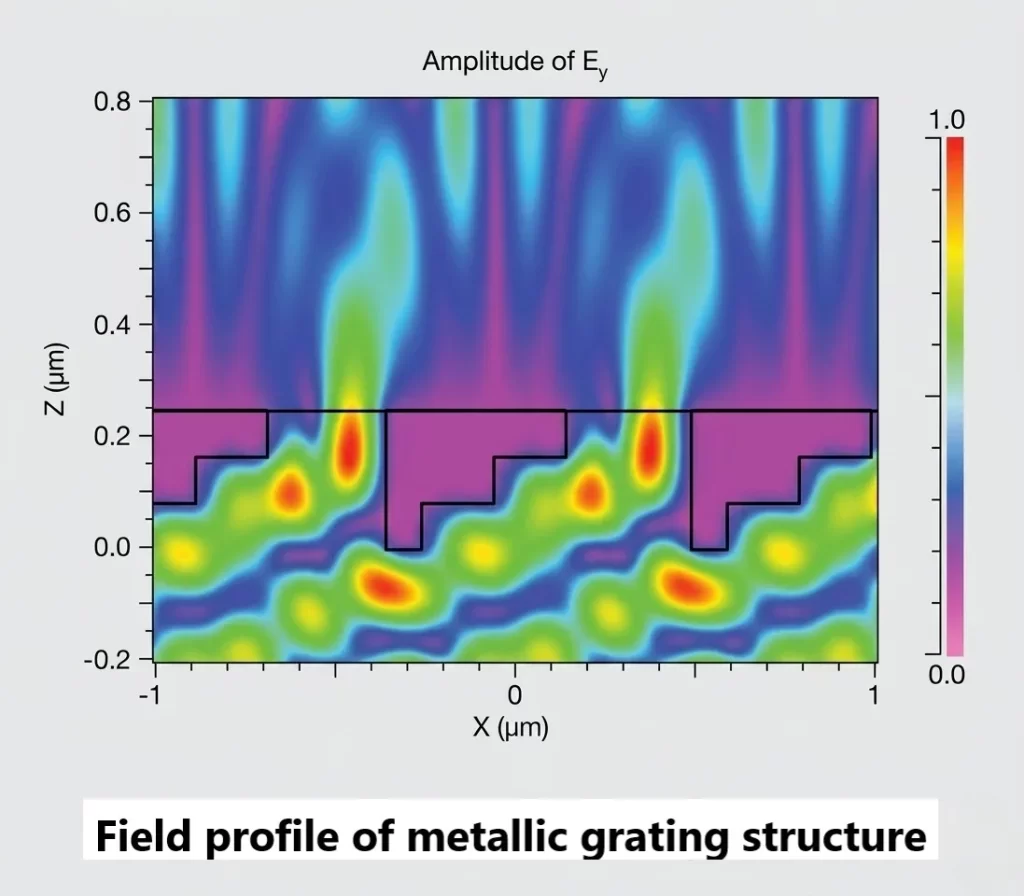
DiffractMOD is a Rigorous Coupled-Wave Analysis (RCWA) solver suited for diffraction gratings, periodic structures, metasurfaces, and subwavelength gratings. It is used for detailed diffractive optics analysis.
Where DiffractMOD is Used?
Diffraction-based optical systems including diffractive optical elements (DOEs), surface and volume gratings, wavelength filters, optical metrology, nano-lithography, polarization devices, photovoltaic structures, 3D displays, and spectroscopy systems.
GratingMOD
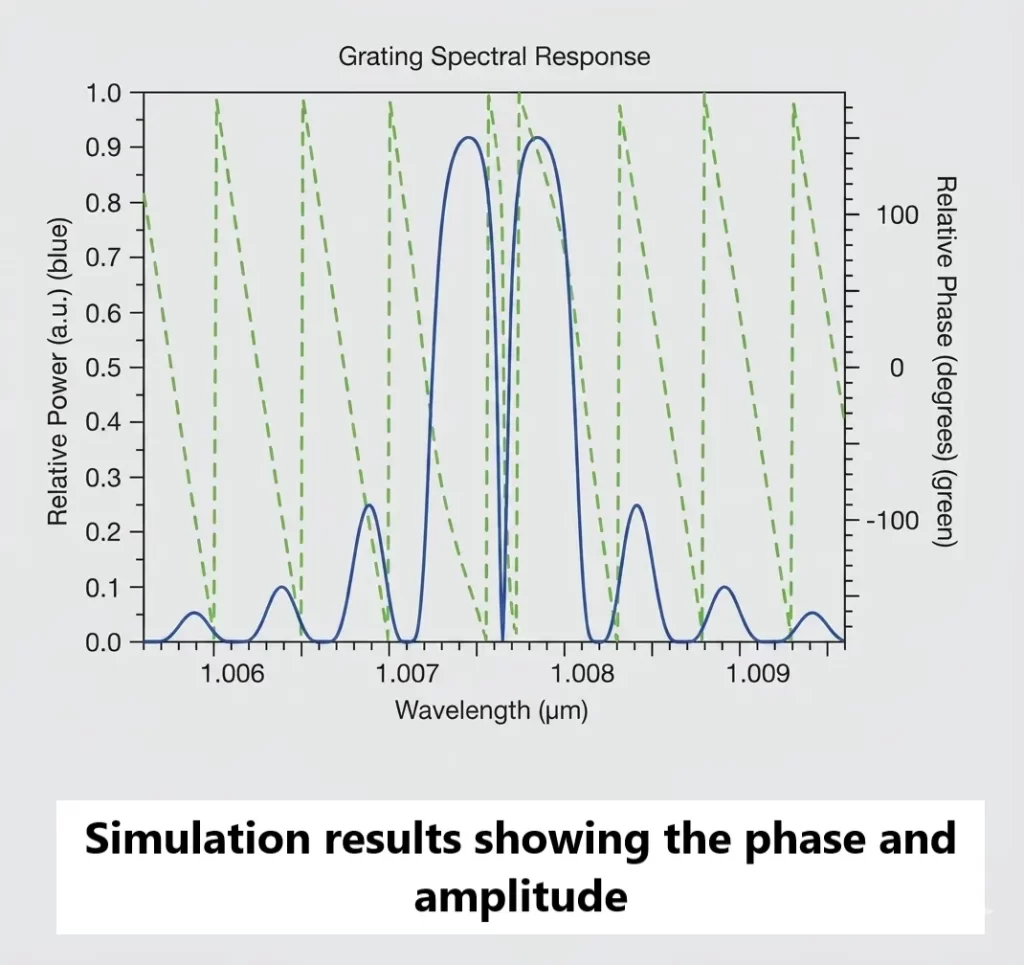
GratingMOD is a Fiber and Bragg Grating solver specialized for fiber Bragg gratings, long-period gratings, chirped gratings, and WDM devices. It is widely used in telecom and sensing workflows.
Where GratingMOD is Used?
Fiber and Bragg grating applications including dispersion compensation, multiplexing/demultiplexing, add/drop filtering, gain equalization, grating-assisted couplers, and long-period grating sensors.
FemSIM
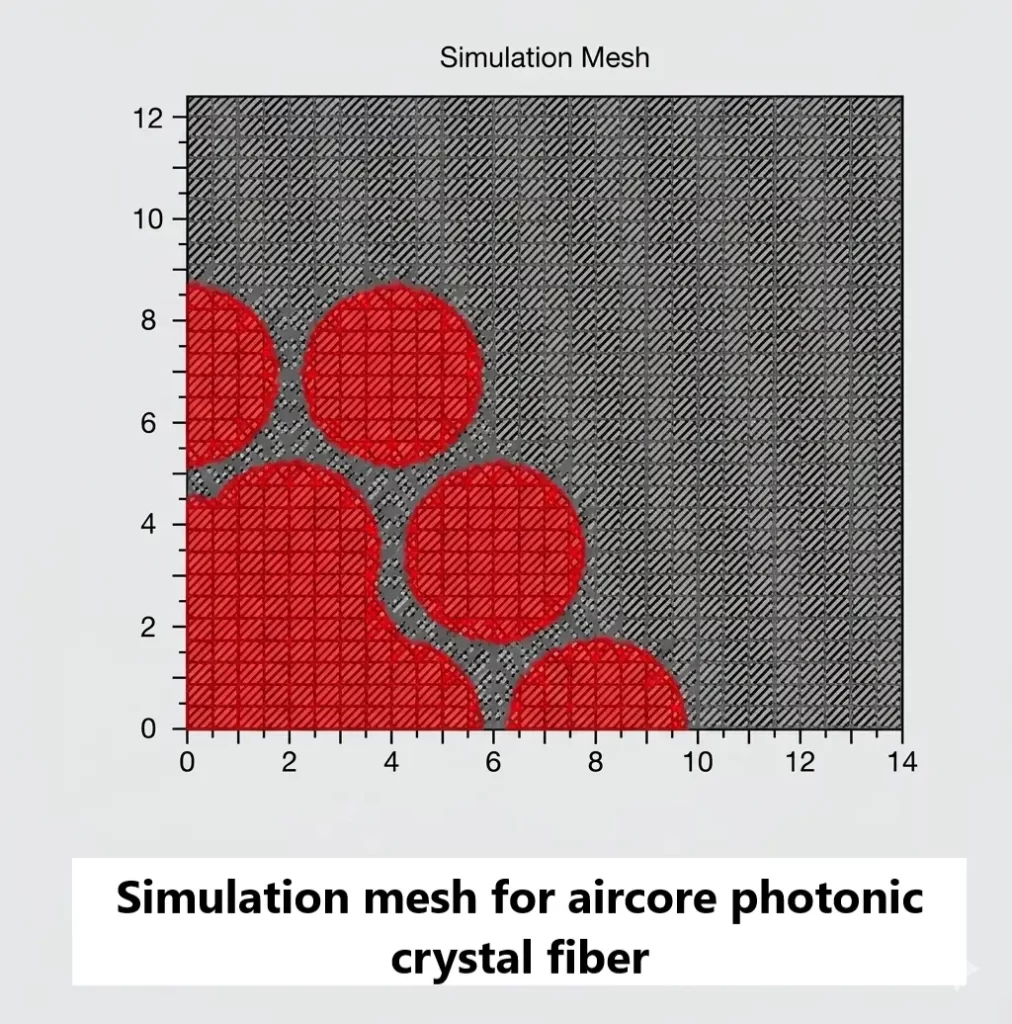
FemSIM is a Finite Element Method (FEM)-based Full-Vector Mode solver used for analyzing electromagnetic modes in complex photonic structures. It accurately computes transverse modes, cavity modes, guided modes, leaky modes, and radiation modes.
It supports arbitrary geometries using a non-uniform hybrid mesh with triangular and rectangular elements for high accuracy.
Best suited for:
- Nano-photonic and silicon photonic devices
- High-index contrast structures
- Complex geometries with curved or irregular profiles
Where FemSIM is Used?
Fiber and Bragg grating applications including dispersion compensation, multiplexing/demultiplexing, add/drop filtering, gain equalization, grating-assisted couplers, and long-period grating sensors.
Why RSoft Simulation Modules is Used?
Photonic device design requires accurate electromagnetic modeling before fabrication. These RSOFT modules allow users to:
- Simulate light propagation in complex waveguide geometries
- Model high-index contrast silicon photonics devices
- Analyze photonic crystal band structures
- Design fiber Bragg gratings and WDM components
- Study nonlinear and dispersive effects
- Optimize device geometry for performance and yield
Unlike simplified analytical tools, RSoft simulation engines solve Maxwell’s equations numerically, providing high-fidelity predictive modeling. This reduces prototyping cycles and fabrication risk.
RSoft Modules Integration with Other Tools
These simulation engines operate within the RSoft CAD platform and integrate into broader workflows:
- OptoCompiler for photonic IC layout
- OptSIM for system-level simulation
- CODE V for Imaging optics
- LightTools for Illumination systems
RSoft CAD: all RSoft Simulation Modules operate within the RSoft CAD environment, which provides the core platform for creating, editing, and managing photonic device structures. RSoft CAD serves as the foundation for building waveguides, gratings, couplers, and other photonic components before performing advanced electromagnetic simulations.
RSoft Utilities: it complement the simulation workflow by providing specialized tools for data conversion, material management, design automation, result processing, and project optimization. These utilities help engineers streamline photonic design tasks and improve overall productivity.
Explore more about the complete design environment in RSoft CAD Environment
Looking to evaluate RSOFT Simulation Modules for your next project?
Our experts can help you explore which RSOFT Simulation Modules fits your design and simulation needs.
Explore Related Solutions

RSoft CAD

RSoft Utilities

LaserMOD

MetaOptic Designer

RSoft Photonic Device Compiler
Share this on: